
WELCOME BONUS 300%
UP TO €2000 + 100
FREE SPINS
UP TO €2000 + 100
FREE SPINS
Home → Games
Casino games at Casino F1
Plein Pays 35:1, Cheval Pays 17:1
French Roulette inner bets like the Plein (straight) pay 35:1 while the Cheval (split) pays 17:1, establishing a house edge of 2.70% distinct from even-money wagers. This higher edge contrasts sharply with La Partage rules that lower straight bets to 1.35%, making the standard inner layout significantly less favorable for long-term retention strategies. Players must accept this elevated cost when targeting high multipliers on single numbers versus safer column placements.
The Corner bet pays 8:1 and the Street pays 11:1, both falling under the same 2.70% house edge category without La Partage protection. In comparison, Baccarat Player Pair side bets offer an 11:1 payout but carry a devastating 10.36% house edge due to their specific pairing conditions. This mathematical disparity highlights why roulette inner bets remain more viable than casino table side wagers despite similar nominal returns on successful hits.
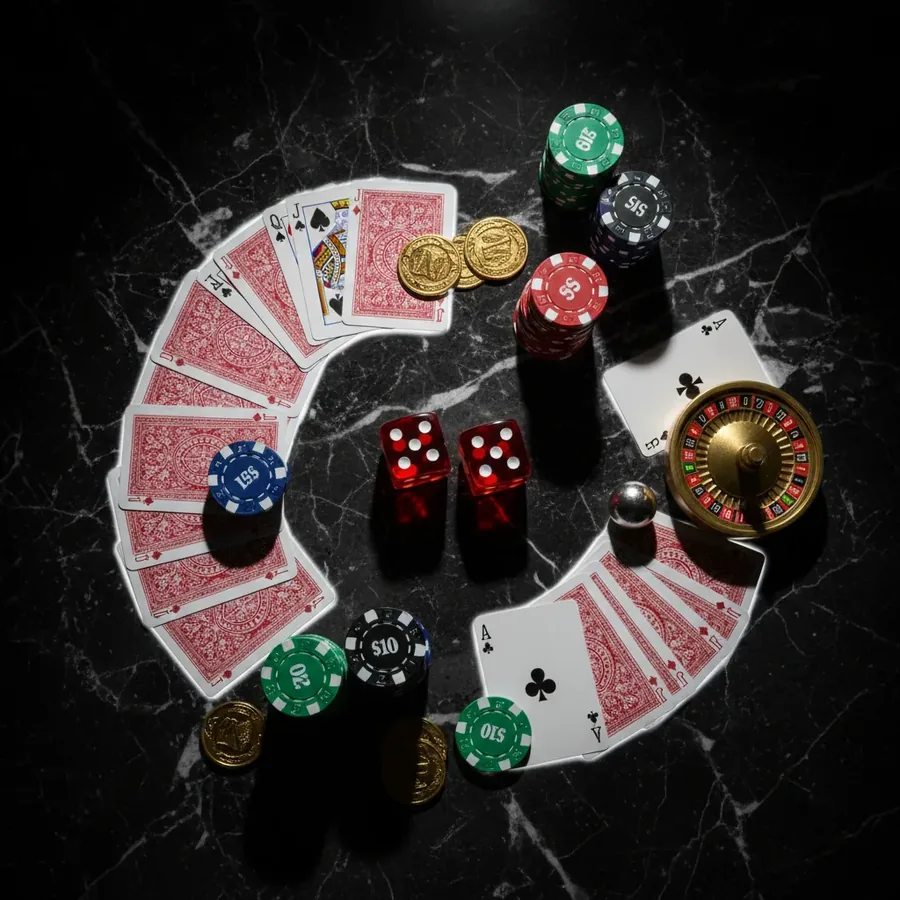
French Roulette: La Partage Lowers to 1.35 Percent
La Partage reduces the house edge on even-money French Roulette bets from 2.70% down to 1.35% by refunding half the stake upon zero. This rule applies exclusively to Red/Black, Odd/Even, and Low/High bets, leaving inner wagers unaffected at the standard European rate. Consequently, strategic players prioritize these protected zones over high-payout combinations to minimize expected loss per spin in volatile sessions.
Double Down: double bet, only one card
Blackjack allows doubling the initial wager for exactly one additional card, a mechanic that increases variance while potentially boosting the Return to Player percentage. Standard six-deck games with S17 rules yield a 0.46% house edge when utilizing optimal doubling strategies alongside basic play fundamentals. This flexibility distinguishes favorable tables from those restricting doubling options to hard totals or limiting post-split opportunities.
How Long Does a Roulette Round Take on Average?
A typical roulette round duration spans approximately two minutes including betting windows and wheel spins, contrasting with rapid-fire slot machine cycles. Craps Pass Line decisions occur much faster with a 0.42% edge per roll, whereas Baccarat Banker rounds maintain a steady pace with a 1.06% house advantage. These temporal differences influence hourly loss rates, as slower games like roulette allow for more calculated decision-making between spins.
Columns and Dozens Pay 2:1 in Roulette
Roulette Column and Dozen bets pay 2:1 with a 2.70% house edge, offering higher volatility than even-money options but lower risk than straight-ups. Sic Bo Big/Small bets also pay 1:1 with a 2.78% edge, providing a comparable risk profile across different game genres. This structural similarity allows players to transfer bankroll management techniques between table games while maintaining consistent exposure to the mathematical disadvantage.
Game categories at a glance
| Category | Examples | Stakes From | Highlight |
|---|---|---|---|
| Slots | The Dog House, Sweet Bonanza, Big Bass Bonanza | 0,10 EUR | thousands of titles |
| Table games | Roulette, Blackjack, Baccarat | 0,50 EUR | classic rules |
| Live casino | Blaze Roulette, Quantum Blackjack Plus Live | 0,20 EUR | real dealers |
| Jackpot games | Mega Moolah, Divine Fortune, Age of the Gods | 0,20 EUR | progressive pools |
| Instant games | Aviator, Plinko, Mines | 0,10 EUR | fast rounds |
| Video poker | Jacks or Better, Deuces Wild | 0,25 EUR | strategy based |
Variance at the Table: 1:1 vs. 35:1
Baccarat Player bets offer a 1:1 payout with an RTP of 98.76%, while Baccarat Banker wins incur a 5% commission reducing the effective return to 0.95:1 despite a superior house edge of 1.06%. This fee structure makes the Banker wager statistically more favorable than the Player option over thousands of rounds, even though both sides pay even money on standard wins. Players should calculate their bankroll based on the lower volatility of these main bets rather than chasing higher variance outcomes.
Side bets like the Baccarat Pair provide a much higher risk profile by paying 11 for 1 when the first two cards match, yet this comes with a steep house edge of 10.36% and an RTP of only 89.64%. The disparity between the 1.06% edge on the Banker and the 10.36% edge on the Pair highlights how auxiliary wagers drastically alter expected returns without changing the core game mechanics. Gamblers must weigh the excitement of larger payouts against the significantly reduced probability of winning these specific outcomes.
Soft 17: the Ace counts 11 or 1
A six-deck Blackjack game featuring Soft 17 rules allows the dealer to hit on a hand containing an Ace counted as 11, which typically increases the house edge compared to standing on all 17s. However, when combined with favorable player options like Double After Split (DAS) and Re-splitting Aces (DOA), the overall RTP can reach 99.54% with a minimal house edge of 0.46%. These specific rule variations are critical for maintaining optimal mathematical advantage in a multi-deck environment where dealer flexibility usually disadvantages the player.
Corner Pays 8:1, Dozen Only 2:1
French Roulette inner bets such as Corner wagers pay 8:1 but carry a higher house edge of 2.70% because they do not qualify for the La Partage rule that protects outside bets. In contrast, Dozen bets pay 2:1 and benefit from the La Partage mechanic, which refunds half the stake on zero results, securing a better RTP of 98.65% for those specific wagers. This distinction means that placing chips on single numbers or corners exposes the player to the full European edge of 2.70% without any safety net during losing spins.
100 EUR bet, 50 rounds: the expected value
Placing 100 EUR bets on French Roulette outer options results in an expected loss of 1.35 EUR per round due to the 1.35% house edge protected by La Partage rules. Over a session of 50 rounds, this accumulates to a total expected value reduction of 67.50 EUR from the initial bankroll, demonstrating the long-term cost of participation. This calculation assumes consistent betting on low-variance outside propositions rather than high-risk inside numbers which would accelerate capital depletion.
Dozen 2:1: Twelve Numbers, One Third Coverage
Dozen bets in French Roulette cover twelve numbers and pay 2:1, offering one-third coverage of the wheel while benefiting from the La Partage rule on zero. This mechanism reduces the effective house edge to 1.35%, making it mathematically superior to American roulette variants that lack such refund policies for even-money outside wagers. Players utilizing this strategy mitigate variance slightly compared to straight-up bets, though the fundamental negative expectation remains unchanged over extended play sessions.
Sic Bo Pays from 1:1 to 180:1
The Small and Big bets in Sic Bo offer a payout of 1:1 with an RTP of 97.22 percent under Atlantic City rules, making them the most statistically sound options available. These wagers lose on any triplet combination, which keeps the house edge at a manageable 2.78 percent for players who understand the specific losing conditions.
In contrast, the Specific Triple bet provides a massive 180:1 payout but carries a significantly higher house edge of 18.52 percent due to its low frequency of occurrence. This steep edge contrasts sharply with the Single Number bet, which offers payouts ranging from 1:1 to 3:1 while maintaining a much lower house edge of 7.87 percent.
The Total Edge across all Sic Bo bets ranges from 2.78 percent up to 33.33 percent depending on the specific wager chosen by the player. This wide variance means that choosing the wrong side bet can drastically reduce expected returns compared to the optimal Small or Big selections found in this game variety.
Double Down: Doubling Your Bet After Two Cards
The Double Down feature allows players to double their initial wager after receiving their first two cards in Blackjack, provided the table rules permit this action on any hand value. This strategy is strictly governed by Basic Strategy, which dictates precise moments for doubling to maximize the Return to Player rate of 99.54 percent on six-deck games.
Players may double down on every two-card hand and are also permitted to double after splitting pairs, known as DAS, which adds flexibility to their betting approach during a session. The dealer stands on Soft 17 in these games, creating a specific mathematical environment where aggressive doubling strategies can effectively reduce the overall house edge below half a percent.
This aggressive betting tactic requires strict adherence to the prescribed Basic Strategy to avoid increasing the house advantage beyond the standard 0.46 percent calculated for optimal play. Deviating from these rules when doubling down can quickly erode the theoretical RTP, turning a favorable statistical position into a disadvantageous one for the long-term bankroll.
House Edge and RTP: Two Names for the Same Number
The House Edge represents the average percentage of each bet that the casino retains over the long term, directly corresponding to the Return to Player percentage expressed as a complement to one hundred percent. For instance, a game with a 97.22 percent RTP has a house edge of exactly 2.78 percent, illustrating the inverse relationship between these two critical statistical measures.
Sic Bo demonstrates this relationship clearly, where the Small and Big bets offer a 97.22 percent RTP against a 2.78 percent house edge, while Specific Triples drop to an 81.48 percent RTP. This drastic difference highlights how varying rules and payout structures within the same game title can alter the fundamental mathematical expectation for the participant significantly.
The Casino Hold'em Ante + Call variant shows a house edge of 2.16 percent on the Ante bet, which translates to a 97.84 percent RTP for that specific portion of the wager. However, the real risk element is lower at 0.82 percent because the average total bet includes both the Ante and the subsequent Call, demonstrating how bet sizing affects effective edges.
Minimum deposit 20 EUR, table games count 10 percent
A minimum deposit of twenty euros is required to access the platform, which serves as the baseline entry point for funding an account before any bonus activation can occur. This amount ensures that players have sufficient capital to meet the wagering requirements associated with the welcome bonus without immediately depleting their funds on low-stakes gameplay.
Table games contribute only ten percent toward the wagering requirement for the three hundred percent welcome bonus, meaning that every twenty euros wagered on blackjack or roulette counts as just two euros. This slow accumulation forces players to either bet significantly more volume on tables or supplement their progress with slots, which contribute one hundred percent to the turnover target.
The disparity between slot contributions and table game contributions creates a strategic dilemma for players aiming to clear the bonus conditions efficiently using card or dice-based games. Since Sic Bo and Blackjack have distinct house edges, the low contribution rate combined with statistical variance makes clearing the bonus through table play a mathematically slower process than using high-contribution alternatives.
Baccarat commission: 5 percent on each Banker win
The Banker bet in Baccarat pays out at 0.95 to 1 instead of even money because the casino deducts a five percent commission on every winning wager placed on this hand. This commission structure compensates for the slight statistical advantage the Banker position holds over the Player position, ensuring the house maintains a profitable edge despite the near-even odds.
With eight decks in play, the Banker bet offers a house edge of just 1.06 percent and an RTP of 98.94 percent, making it the most statistically favorable option in the game. This superior return contrasts sharply with the Player bet, which carries a higher house edge of 1.24 percent despite paying out at true even money without any commission deductions.
Side bets such as the Player Pair or Banker Pair carry a significantly higher house edge of 10.36 percent, offering payouts of eleven to one for matching starting cards. These side wagers provide immediate excitement but drastically reduce the overall return compared to the main Banker or Player bets, illustrating the trade-off between payout size and statistical probability.
Contact
Live - online chat
Banking


Providers


F1 Casino 2026