
WELCOME BONUS 300%
UP TO €2000 + 100
FREE SPINS
UP TO €2000 + 100
FREE SPINS
Home → Roulette
Roulette at Casino F1
La Partage Applies Only to Even Chances
Roulette Französisch mit La Partage offers a house edge of 1.35% on even chances like Red/Black, Odd/Even, and Low/High. This rule applies exclusively to outside bets, meaning straight wagers retain the standard 2.70% edge without partial refund mechanisms. The 50% stake return upon zero significantly reduces long-term loss rates for conservative players compared to other variants.
Inner bets such as Straight (35:1), Split (17:1), or Corner (8:1) do not qualify for the La Partage benefit in this specific variant. Consequently, these higher-risk positions carry the full European house edge of 2.70%, identical to the standard non-La Partage version. Players betting inside must accept the standard risk profile without the protective half-refund feature available to outside bettors.
The French variant without La Partage maintains a 2.70% house edge across all inner wagers despite having the same 37-sector wheel. While outer bets lose their protective mechanism, the payout structure remains consistent with standard European rules at 35:1 for singles. This distinction ensures that only specific even-money propositions benefit from the reduced volatility associated with the partial return rule.
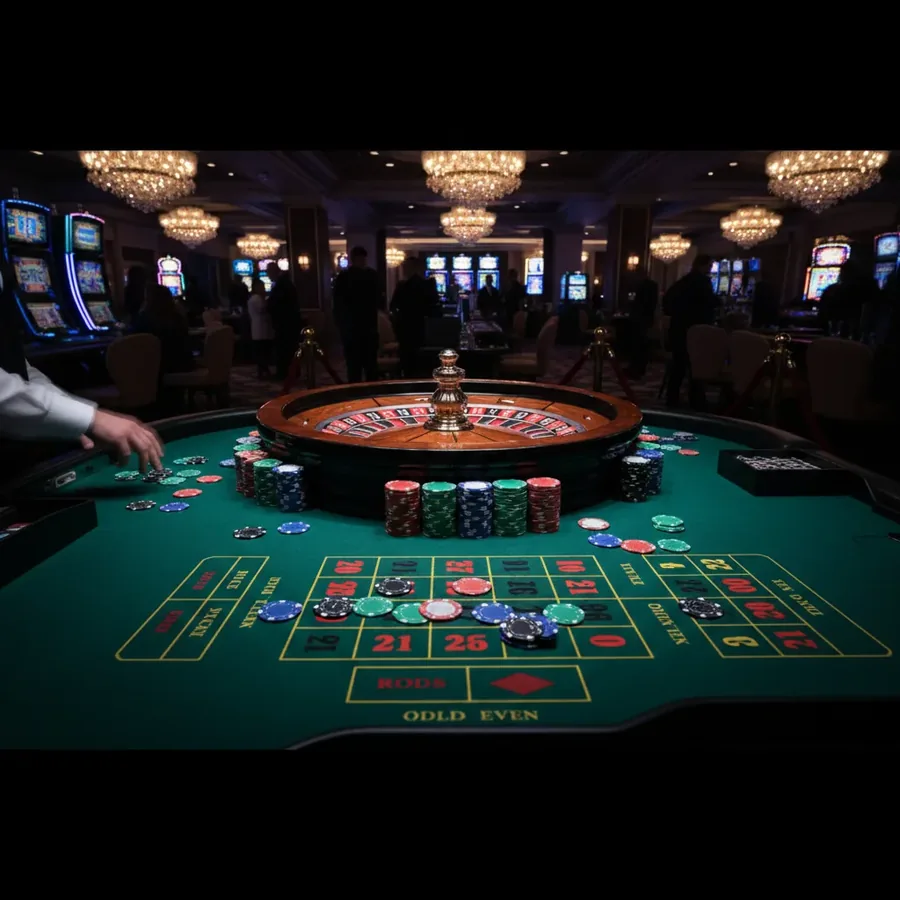
How Long is a Lightning Roulette Round?
XXXtreme Lightning Roulette by Evolution operates with stakes ranging from 0.20 EUR to 5,000 EUR and features up to ten randomly selected numbers. Each round assigns multipliers up to 2,000x via Chain Lightning and Double Strike mechanics directly to straight bets covering those specific numbers. The duration depends on dealer speed but typically allows for precise placement of high-stakes wagers before the draw concludes.
PowerUP Roulette by Pragmatic Play Live introduces three to five PowerUP numbers per spin with a maximum win cap of 15,525x the stake. The table limits stakes between 0.20 EUR and 2,000 EUR while maintaining an RTP of 97.19% across the gameplay cycle. These rounds integrate bonus features that alter potential payouts without extending the fundamental duration of the spin cycle itself.
Quantum Roulette by Playtech supports stakes from 0.10 EUR to 5,000 EUR and applies Quantum Multipliers up to 500x to winning straight bets. Unlike the fixed number selections in XXXtreme, this variant uses a different multiplier distribution system affecting the final payout calculation. The round structure remains consistent with standard live dealer pacing, ensuring predictable timing for strategic bet placement.
2.70 vs 5.26 Percent House Edge
American Roulette utilizes a 38-sector wheel including both single and double zeros, resulting in a house edge of 5.26% on most bets. This edge is effectively doubled compared to the European variant because the additional zero sector increases the total outcomes without altering payout ratios. Players facing this wheel encounter significantly higher theoretical losses per unit wagered over extended play sessions.
European Roulette features a 37-sector wheel with only a single zero, establishing a constant house edge of 2.70% across all bet types. Payouts remain identical to American tables, such as 35:1 for Straight bets, but the reduced number of sectors lowers the casino's statistical advantage. This structural difference makes the European wheel mathematically superior for players seeking to minimize long-term erosion of their bankroll.
The Five Number Bet in American Roulette covers 0, 00, 1, 2, and 3 with a payout of 6:1 but carries a steep house edge of 7.89%. This specific wager represents the highest disadvantageous position on the American wheel, exceeding the standard 5.26% edge found elsewhere. No equivalent exists in European or French variants, making it a unique trap for players unfamiliar with American roulette rules.
When Does the Lock for Risk Bets Apply?
Table games contribute only 10% toward the wagering requirement of the 300% welcome bonus up to €2,000 plus 100 free spins. This low contribution rate effectively locks high-risk strategies by requiring substantially higher turnover to clear bonus funds compared to slot contributions. Players engaging in roulette must account for this restriction when planning their bonus usage strategy across different game categories.
The 10% contribution rate means that every €100 wagered on roulette counts as only €10 toward meeting the bonus conditions. To clear a €2,000 bonus with a typical 40x wagering requirement, players must generate €80,000 in roulette turnover instead of €80,000 in slots. This disparity forces players to either switch games or accept a much longer path to withdrawable cash.
Straight bets paying 35:1 and splits paying 17:1 fall under this restricted category due to their classification as table games. Unlike side bets or progressive jackpots which might have different weights, standard roulette wagers are uniformly subject to the 10% limit. This uniform application ensures that all roulette activity contributes equally slowly to the release of bonus restrictions.
Step-by-Step to Your First Straight Bet
A Straight bet covers a single number on the roulette wheel and pays out at odds of 35:1 regardless of the variant played. In European Roulette, this wager benefits from the lower 2.70% house edge established by the 37-sector wheel design. Players selecting this option place their chip directly on one specific digit within the betting grid layout.
In American Roulette, the same Straight bet still returns 35:1 but faces a higher 5.26% house edge due to the presence of the double zero. The probability of winning remains 1 in 38, reducing the expected value compared to the European version with its 1 in 37 chance. This difference highlights the financial impact of wheel configuration on individual bet outcomes.
Live dealer tables like XXXtreme Lightning Roulette allow Straight bets up to 5,000 EUR with potential multipliers increasing the payout significantly. A winning Straight bet could theoretically exceed standard returns if the chosen number receives a Chain Lightning or Double Strike multiplier. This feature adds volatility to the basic 35:1 payout structure available on all standard roulette variants.
Roulette bet types at a glance
| Bet | Payout | Win Chance | Numbers Covered | House Edge |
|---|---|---|---|---|
| Roulette Französisch, innere Einsätze (La Partage gilt nicht) | Straight 35:1, Split 17:1, Street 11:1, Corner 8:1, Six Line 5:1, Dozen 2:1, Column 2:1 | 97.30% | Rad gleich (37 Sektoren), aber La Partage/En Prison gilt nicht für innere Einsätze – Edge bleibt europäisch | 2.70% |
| Roulette Europäisch (einfache Null, 37 Sektoren) | Straight 35:1, Split 17:1, Street 11:1, Corner 8:1, Six Line 5:1, Dozen 2:1, Column 2:1, Rot/Schwarz 1:1, Odd/Even 1:1, 1-18/19-36 1:1 | 97.30% | 37 Sektoren (1–36 + 0); Auszahlungen wie für 36 Sektoren – daher konstanter Edge auf ALLE Wetten | 2.70% |
| Roulette Amerikanisch (doppelte Null, 38 Sektoren) | Straight 35:1, Split 17:1, Street 11:1, Corner 8:1, Six Line 5:1, Dozen 2:1, Column 2:1, Rot/Schwarz 1:1 | 94.74% | 38 Sektoren (1–36 + 0 + 00); Auszahlungen wie beim europäischen Rad, aber der zusätzliche Sektor verdoppelt den Hausvorteil | 5.26% |
| Roulette Französisch mit La Partage (gerade Chancen) | Rot/Schwarz 1:1 (bei 0 Rückerstattung 50%), Odd/Even 1:1, Low/High 1:1; Innere Einsätze ohne La Partage: Straight 35:1, Split 17:1, Street 11:1, Corner 8:1 | 98.65% | Bei 0 wird die Hälfte des Einsatzes auf gerade Chancen zurückerstattet (Rot/Schwarz, Pair/Impair, Manque/Passe). En Prison gibt denselben 1,35%. Regel gilt NUR für gleiche Einsätze | 1.35% |
| Roulette Amerikanisch – Five Number Bet (0, 00, 1, 2, 3) | Five Number 6:1 (deckt 5 von 38 Sektoren) | 92.11% | Einzige Wette am amerikanischen Rad mit Edge über 5,26% – „Fallenwette“. Kein Äquivalent am europäischen Rad | 7.89% |
RTP vs. House Edge: Same Number Differently
The French Roulette variant with inner bets carries a 97.30% RTP and a 2.70% house edge because La Partage does not apply to these specific wagers. This stands in sharp contrast to the American Roulette table, which shares the same straight-up payout structure but suffers from a significantly lower 94.74% RTP due to the presence of an extra double-zero sector on the wheel. Players betting on single numbers face identical 35:1 returns, yet the mathematical advantage shifts heavily against them on the American layout compared to the European standard.
Inner bets on the French table yield a 2.70% house edge despite the 97.30% RTP, as the La Partage rule is explicitly excluded from these wagers by the casino terms. Conversely, even-money bets on the same French table benefit from a reduced 1.35% house edge when the ball lands on zero, effectively doubling the player's theoretical return for those specific outcomes. The Straight bet remains fixed at 35:1 across both scenarios, but the underlying probability changes based entirely on whether the special refund rule triggers during a losing spin.
The American Roulette game presents a starkly different mathematical profile with a 5.26% house edge, resulting in a much lower 94.74% RTP compared to the 97.30% found on European tables. This disadvantage stems directly from the 38-sector wheel, which includes both single and double zeros, thereby increasing the probability of loss for all standard outside bets like Red or Black. Consequently, players seeking higher theoretical returns should avoid the American variant, as the additional green pocket ensures the casino retains a larger percentage of every wager placed over time.
French with La Partage vs European
French Roulette featuring La Partage offers a superior 98.65% RTP for even-money bets, reducing the house edge to just 1.35% when the ball lands on zero. This mechanism refunds half the stake on wagers like Red/Black, providing a significant safety net that is completely absent in standard European Roulette, which maintains a flat 2.70% house edge regardless of the outcome. The Straight bet pays 35:1 in both versions, but the effective cost of playing decreases substantially on the French table due to this partial refund feature on outer bets.
European Roulette operates with a consistent 2.70% house edge across all bet types, including the Straight, Split, and Dozen wagers, because it lacks the La Partage rule found in its French counterpart. While the payout structure mirrors the French version exactly, with Straight bets returning 35:1 and even-money bets paying 1:1, the absence of any zero-refund mechanism means players bear the full statistical disadvantage on every losing spin involving zero. This makes the European variant mathematically less favorable than the French option for players focusing on low-risk outside bets.
The distinction between these two variants lies primarily in how they handle the zero outcome for even-money propositions, where French Roulette refunds fifty percent of the stake while European Roulette does not. Both games utilize a single-zero wheel with 37 sectors, ensuring that the base probability for winning combinations remains identical except for the special refund clause in the French version. Players prioritizing bankroll preservation should note that the 1.35% edge on French even-money bets is nearly half the 2.70% edge applied uniformly across all bets on the European table.
Inner bets on both tables ignore the La Partage advantage, maintaining a 2.70% house edge on French Roulette and a uniform 2.70% edge on European Roulette for all direct number wagers. The Straight bet pays 35:1 in both cases, meaning players betting exclusively on single numbers will experience no difference in theoretical return between the two game types. This consistency highlights that the primary benefit of the French variant is restricted solely to outside bets, leaving high-variance strategies unaffected by the superior ruleset.
House Edge 2.70 Percent in One Number
The 2.70% house edge on French Roulette applies strictly to inner bets such as the Straight, Split, Street, Corner, and Six Line wagers, where the La Partage rule is explicitly excluded. A Straight bet covering one number pays 35:1, while a Split bet covering two numbers pays 17:1, both operating under the standard European probability model without any zero-refund benefits. This fixed edge ensures that the casino retains 2.70 cents for every euro wagered on these specific high-variance bets, mirroring the mathematical structure of standard European Roulette exactly.
European Roulette maintains a uniform 2.70% house edge across all bet types, including the Straight, Dozen, and Column wagers, due to the single-zero wheel configuration with 37 sectors. The Straight bet offers a 35:1 payout, while the Dozen bet pays 2:1, reflecting the same underlying probability calculations as the French variant for non-protected bets. Players engaging with these specific wagers will encounter the same statistical disadvantage on both tables, as the absence of La Partage for inner numbers eliminates any potential reduction in the casino's advantage.
The consistency of the 2.70% edge on inner bets allows for direct comparison between French and European Roulette, as both games utilize identical payout structures for Straight, Split, and Street wagers. A Corner bet paying 8:1 or a Six Line bet paying 5:1 carries the same mathematical weight on both tables, confirming that the unique French rules only impact even-money outside bets. This uniformity simplifies strategy planning, as players can expect identical long-term returns on complex inside combinations regardless of whether they choose the French or European variant of the game.
The Straight bet, paying 35:1, serves as the baseline for understanding the 2.70% house edge on both French and European roulette tables, as it is unaffected by any special refund rules. This specific wager covers a single number out of 37 possible outcomes, establishing the fundamental probability that drives the casino's advantage on all inner bet types. Understanding this constant edge helps players recognize that the primary strategic difference between the two games lies solely in the treatment of zero for outside bets, not for direct number selections.
How Long a Session May Last
Table games contribute only 10% toward the wagering requirement of the 300% welcome bonus up to €2,000, significantly extending the time needed to clear the promotional funds. With a standard wagering multiplier often applied to the bonus amount, players must generate substantial turnover through roulette spins to meet the threshold, given the limited contribution rate. This restriction forces users to play more rounds than slot players, effectively lengthening their session duration to satisfy the casino's conditions before any withdrawal is permitted.
The Quantum Roulette table by Playtech accepts bets ranging from 0.10 EUR to 5,000 EUR, allowing players to control their bankroll depletion rate during extended sessions. Lower stakes enable longer playtimes, while the potential for multipliers up to 500x introduces volatility that can rapidly alter the remaining balance within a short period. Players utilizing the minimum stake can theoretically sustain their session longer, provided they do not hit a losing streak that depletes their funds before meeting the necessary turnover requirements.
PowerUP Roulette by Pragmatic Play Live features a betting range of 0.20 EUR to 2,000 EUR, offering a moderate entry point for managing session longevity and risk exposure. The game's RTP of 97.19% suggests a relatively fair return over time, but the variable PowerUP numbers can drastically increase variance, potentially shortening a session if luck turns unfavorable. Balancing bet size against the slow 10% contribution rate requires careful bankroll management to ensure sufficient funds remain to complete the required wagering volume.
XXXtreme Lightning Roulette by Evolution permits bets between 0.20 EUR and 5,000 EUR, with payouts up to 2,000x creating high-volatility outcomes that can quickly end a session. Despite the attractive RTP of 97.30%, the reliance on random lightning strikes means wins are unpredictable, making it difficult to estimate exact session lengths based solely on mathematical expectations. Players must account for this unpredictability alongside the restrictive 10% table game contribution, which demands a higher total volume of spins to clear the bonus funds effectively.
Session Limit 25 Euro and Fixed Number of Rounds
A hypothetical session limit of 25 EUR represents a strict bankroll constraint that would severely restrict the ability to meet the wagering requirements for the €2,000 welcome bonus. Given that table games contribute only 10% to the turnover, generating the necessary volume from such a small capital base is mathematically improbable without hitting exceptionally large wins. This limitation would likely result in the forfeiture of the bonus funds, as the player cannot achieve the required turnover volume within the constrained financial boundary.
The fixed number of rounds assumption further complicates session planning, as roulette outcomes are independent events that do not guarantee progress toward clearing the bonus terms. Even with a fixed budget of 25 EUR, the randomness of the wheel means that a player could exhaust their funds in very few spins or extend play significantly depending on variance. This uncertainty makes it impossible to predict exactly how many rounds are needed to satisfy the wagering conditions, highlighting the risk inherent in rigid session limits.
The 300% welcome bonus up to €2,000 requires substantial turnover to unlock, and a 25 EUR limit combined with a fixed round count creates an insurmountable barrier for most players. Since only 10% of table game wagers count toward the requirement, players need to wager significantly more than the bonus value itself to convert the funds into withdrawable cash. This structural disadvantage means that casual players with limited budgets or fixed time commitments are unlikely to successfully navigate the bonus terms using roulette strategies.
How Much to Bet for 10 Percent Contribution?
The 300% welcome bonus up to €2,000 plus 100 free spins requires specific wagering activity on table games. Table games contribute only 10 percent toward the total bonus turnover requirement. This low contribution rate forces players to bet significantly larger amounts than with slots. The mathematical impact is immediate and substantial for any roulette strategy.
Calculating the required volume reveals the steep cost of clearing the offer. A maximum deposit of €666.67 triggers the full €2,000 bonus amount. Multiplying this €2,000 by the standard 40x wagering multiplier results in a massive 80,000 € turnover target. This figure represents the absolute minimum betting volume needed before withdrawal eligibility.
Comparing this to standard slot contributions highlights the efficiency gap. If slots contributed 100 percent, the same €2,000 bonus would require only 80,000 € in bets. However, the 10 percent table game contribution effectively multiplies the required betting volume by ten. Players must place 800,000 € in wagers on eligible table games to clear the funds.
This calculation assumes consistent play on qualifying games without interruption. Any deviation from the 10 percent contribution rule alters the final turnover target. The strict application of this percentage ensures the casino retains its mathematical edge throughout the wagering process. Players should verify the current terms before initiating their first deposit.
Check Table Limit Before First Progression Starts
Quantum Roulette offers a wide betting range from 0.10 to 5,000 EUR per spin. This high upper limit accommodates aggressive progression strategies like the Martingale system. Players can increase stakes rapidly after losses without hitting the table ceiling immediately. The Playtech provider designed this flexibility to support high-volume betting patterns.
In contrast, PowerUP Roulette imposes a stricter maximum bet of 2,000 EUR. This lower cap restricts the maximum potential loss during negative progression sequences. Players utilizing exponential betting systems must monitor their bankroll more closely against this limit. The Pragmatic Play Live implementation balances high volatility with controlled exposure for casual users.
XXXtreme Lightning Roulette also caps bets at 5,000 EUR, matching Quantum Roulette limits. Evolution Gaming allows large stakes but introduces random multipliers that complicate progression planning. The maximum win cap of 2,000x on direct bets adds another layer of complexity. Bettors must balance table limits with the potential payout restrictions inherent in lightning mechanics.
Understanding these distinct limits prevents strategic failures during active play sessions. Exceeding the specified maximum bet voids winnings and forfeits bonus funds entirely. Each provider enforces these boundaries to manage risk exposure and maintain game integrity. Always verify the current table limits before committing significant capital to a single session.
Even Chances vs Straight: Variance Comparison
European Roulette features a single zero across 37 sectors, establishing a house edge of 2.70%. Betting on even chances like Red/Black pays 1:1 with a near fifty-fifty probability. These bets minimize variance because they cover half the available winning numbers on the wheel. The RTP remains stable at 97.30% regardless of the specific even chance selected.
Straight bets on individual numbers offer higher payouts but drastically increase volatility. A successful straight bet pays 35:1, covering only one of the thirty-seven sectors. This concentration of risk leads to frequent small losses punctuated by rare large wins. The mathematical expectation remains identical to even chance bets despite the different payout structure.
American Roulette worsens the variance profile by introducing a double zero sector. The house edge jumps to 5.26% due to the additional losing number on the wheel. Even chance bets now pay 1:1 but succeed less frequently than in European variants. The Five Number Bet exacerbates this issue with a staggering 7.89% house edge.
The choice between even chances and straight bets dictates the player's experience duration. Low variance even chance bets extend playing time by reducing rapid bankroll depletion. High variance straight bets offer excitement but typically result in faster fund exhaustion. Selecting the appropriate bet type aligns with individual risk tolerance and financial goals.
Quantum Roulette: Which Numbers Get Multipliers
Quantum Roulette utilizes a Random Number Generator to select winning multipliers before each spin. The Playtech engine identifies specific numbers on the wheel to receive enhanced payout values. These quantum multipliers can reach up to 500x on standard straight bets. The mechanism operates independently of the physical ball landing position or previous outcomes.
The multiplier selection process affects only the final payout if the chosen number wins. A straight bet on a non-multiplied number still pays the standard 35:1 ratio. Conversely, hitting a multiplied number triggers the amplified payout based on the RNG outcome. This feature adds unpredictability to the traditional European roulette framework established earlier.
PowerUP Roulette employs a similar concept but applies multipliers differently via PowerUP numbers. The Pragmatic Play Live variant selects three to five numbers for potential boosts. These boosted numbers can yield maximum wins up to 15,525x the original stake. The RTP for this game stands at 97.19%, slightly below the European standard.
XXXtreme Lightning Roulette further complicates the multiplier landscape with Chain Lightning features. Evolution Gaming assigns up to ten numbers with multipliers reaching 2,000x per hit. The Double Strike mechanic can combine multipliers for even higher potential returns. Understanding these distinct multiplier systems is crucial for managing expectations during live play.
How Long for 40x Wager with 10 Percent?
Clearing the 40x wagering requirement on a €2,000 bonus demands 80,000 € in total bets. With table games contributing only 10 percent, players must actually wager 800,000 € to satisfy the condition. This massive volume transforms a simple bonus into a long-term commitment requiring discipline. The time required depends entirely on the average bet size and game speed.
Assuming an average bet of €1 per spin on European Roulette, the math becomes stark. At approximately sixty spins per hour, clearing 800,000 € takes over 13,000 hours of continuous play. This timeframe exceeds typical human capacity for sustained gambling activity without breaks. The practical impossibility highlights the restrictive nature of low-contribution table game rules.
Increasing the average bet size reduces the total time but increases financial risk exponentially. Betting €10 per spin cuts the required hours down to roughly 1,300 hours. While more manageable, this approach exposes the player to significant variance and potential ruin. The house edge of 2.70% ensures gradual bankroll erosion regardless of bet frequency.
Strategic planning is essential to navigate these stringent wagering requirements effectively. Players should calculate their expected hourly loss based on the house edge and bet size. Factoring in the 10 percent contribution rate provides a realistic timeline for bonus clearance. Ignoring these calculations often leads to premature account closure and forfeited bonus funds.
Contact
Live - online chat
Banking


Providers


F1 Casino 2026